Street Racing History in Tampa Florida

Street Racing Traf1063 316.191.2a Misd 1st Unlawful Racing On Highway

Street Racing

Street Racing “the operation of two or more motor vehicles from a point side by side at accelerating speeds in a competitive attempt to outdistance each other”


A Brief History of Street Racing


In light of the tragedy that occurred in Tampa as reported by the Saint Petersburg Times, We will review the history of street racing and law enforcement in Tampa Bay. Two drivers and a passenger face criminal street racing and homicide charges for killing a mother who was pushing her baby across the street.

Of the 130 ways you can go to jail for Criminal Traffic charges in Tampa, unlawful racing on the highway is one of them. Some jurisdictions have destroyed race cars used in street races and one Court in Florida has even chosen to declare the drag racing statute unconstitutional.

Drag racing on Gandy Boulevard, specifically on the bridge has been a Troublesome area for law enforcement in Tampa. Racers gather at 4th Street in Pinellas County and Stage there street races on Gandy Boulevard. When the racers exit the bridge they are in Hillsborough County and police attempt to stop cars involved in allegations of drag racing.

Prison for street racing has been imposed by courts in Tampa where a death has been involved. Sometimes police who do not witness the actual crash used video cameras from surrounding buildings to reconstruct what has occurred.

The Courtney Campbell Parkway has been the site of Street Racing incidents in the past years.

Usually police impose charges for misdemeanor racing. Those charges can result in an arrest and we have provided the racing statute Below in its entirety. Police have even given parking tickets to spectators for watching street racing.

The essence of a drag race is a competitive attempt to outdistance another vehicle. Sometimes that is difficult to prove. The police must establish that in fact what was underway what was a race. There is no requirement rent there is no requirement for a predetermined course just that the court or jury can reasonably interpret the driving event to be a race.

Spectators Can also be charged since it is an affirmative choice to attend or participate in the race. Courts are to look at the relationship between the race driver and the individual. Gambling or betting on the outcome of a race can be used to establish That a spectator was criminally involved in a race.

Vehicles used in street races can be forfeited by the state if the driver has been convicted within the past 5 years for street racing.

There are 130 ways to go to jail for traffic charges in Tampa. https://dui2go.com/130-ways-to-go-to-jail-in-traffic-court-florida-criminal-traffic-charges-complete-list/


Seizure and Destruction of Street Race Cars


Florida and California have seizure laws for street race cars. When the whoosh went out of the tires the street racer sighed, as glass exploded and rained down it all became real – the cops had crushed his car. The destruction was part of a smackdown on illegal street racing in Southern California. Cops crushed six race cars. A 350-horsepower 4 cylinder engine on which the racer spent at least $10,000 to get into top shape. The car would top out at 160 mph, the racer said, swearing it could beat a Corvette or even a Ferrari.


Prior Street Racing Cases in Florida

Drag Racing Statute Unconstitutional


Catching Street Racers just got a little tougher. Cops lost a valuable tool in the war on wheels. The street racing statute is unconstitutional according to the Fourth District Court of Appeals.

The court cleared a Broward teen who was driving 130 mph in a 65 mph zone. Officers couldn’t determine who was racing, and who was just passing another car that was also speeding. “You could have two people driving down the turnpike next to each other at the same rate of speed, and based on the way the statute is written, this is what the court said, that they both could be charged with drag racing,” says Elizabeth Parker with the State Attorney’s office.

70-people have been busted for drag racing in Palm Beach County in the last year. The penalties are harsh – Up to a year in jail and an automatic license suspension.

Drag Racing on Gandy Boulevard


Living around the Fourth Street/Gandy area is a drag for residents who adore peace and quiet. Drag racing in the area has been going on forever. Someone recently wrote the Saint Petersburg Times, “This stretch of road, from the Gandy/Roosevelt/Fourth Street intersection down to the Howard Frankland Bridge turnoff, has become a speedway. My safety concern is not only personal, but for the numerous families with children who live in the area.”

Cars regularly reach speeds well over 80 mph on Fourth Street N and drag racing on the weekends that starts on Friday and Saturday nights about midnight and goes until 2 or 3 a.m. “Cars with amplified motors and mufflers meet near the 7-Eleven at 115th Avenue and Fourth Street and drag race down the stretch of road and turn around at the last U-turn before the Gandy bridge. They often use the 7-Eleven as a turnaround as well,” a witness said.

The Pinellas County Sheriff”s Office said law enforcement is stymied by an organized underground group determined to break the law and evade police. One Deputy said, “Part of what makes it difficult is that the racers use the same technology we have. They use lookouts and radios and cell phones to communicate . . . We have undercover people in the crowd with cameras, documenting the crowds that gather there and we sometimes catch the spectators and have issued citations, but the citations have been dismissed by traffic court judges.”

Prison for Street Racing


Tampa Criminal Defense Attorney notes in a case where someone else was the defense attorney – Street racing in a Nissan 350Z, plus death of a bystander, plus a jury conviction equals vehicular homicide, reckless driving and unlawful racing, plus at least 15 years in prison.

As for the other racer – leaving the scene of the accident, plus testimony at the 350Z trial (to avoid a 30-year sentence) equals three years in prison.

The bystanders were making a U-turn when the 350Z slammed into them, according to published reports. Traffic Homicide investigators estimated speed at over 100 in a 45 mph zone. The defensee argued that what happened was nothing but a tragic accident. In a twist, the St Pete Times reported that “Prosecutors used video surveillance from a carwash . . . that captured the two cars racing.”

Source: https://www.tampabay.com/news/courts/criminal/street-racer-found-guilty-in-83-year-old-womans-death/1044011

Tampa Street Racers and Spectators Need Lawyer


Tampa Traffic Lawyer notes an area cops cracked down on street racers and fans along Fourth Street N. Everyone began a dash for their cars when cops came down the I-275 interstate ramp. Cops blocked off the street to prevent escaping to I-275 or Gandy Blvd. Another target for traffic law enforcement is the Courtney Campbell Parkway.

The stretch of Fourth from I-275 to the Inlet Bay at Gateway apartment complex is flat and straight, four lanes surrounded by nothing but grass and water.

Earlier officers have arrested four people on misdemeanor racing charges. Cops videotaped license plates of racers and fans alike. A few days later, 130 drivers got $30 parking tickets in the mail. It’s now clear that fans are targets too. A $151 ticket and three points can be placed against a driver’s license. According to the media, the last ticket was written at 4:40 a.m. 31/2 hours, 221 citations, and a DUI arrest.

Source: https://www.tampabay.com/news/publicsafety/crime/article1012528.ece

Tampa Street Racing Defense Attorney Penalties


Definitions of Street Racing in Florida:

(a) “Conviction” means a determination of guilt that is the result of a plea or trial, regardless of whether adjudication is withheld.

(b) “Drag race” means the operation of two or more motor vehicles from a point side by side at accelerating speeds in a competitive attempt to outdistance each other, or the operation of one or more motor vehicles over a common selected course, from the same point to the same point, for the purpose of comparing the relative speeds or power of acceleration of such motor vehicle or motor vehicles within a certain distance or time limit.

(c) “Race” means the use of one or more motor vehicles in competition, arising from a challenge to demonstrate superiority of a motor vehicle or driver and the acceptance or competitive response to that challenge, either through a prior arrangement or in immediate response, in which the competitor attempts to outgain or outdistance another motor vehicle, to prevent another motor vehicle from passing, to arrive at a given destination ahead of another motor vehicle or motor vehicles, or to test the physical stamina or endurance of drivers over long-distance driving routes. A race may be prearranged or may occur through a competitive response to conduct on the part of one or more drivers which, under the totality of the circumstances, can reasonably be interpreted as a challenge to race.

(d) “Spectator” means any person who is knowingly present at and views a drag race, when such presence is the result of an affirmative choice to attend or participate in the race. For purposes of determining whether or not an individual is a spectator, finders of fact shall consider the relationship between the racer and the individual, evidence of gambling or betting on the outcome of the race, and any other factor that would tend to show knowing attendance or participation.

(2)(a) A person may not:

1. Drive any motor vehicle, including any motorcycle, in any race, speed competition or contest, drag race or acceleration contest, test of physical endurance, or exhibition of speed or acceleration or for the purpose of making a speed record on any highway, roadway, or parking lot;

2. In any manner participate in, coordinate, facilitate, or collect moneys at any location for any such race, competition, contest, test, or exhibition;

3. Knowingly ride as a passenger in any such race, competition, contest, test, or exhibition; or

4. Purposefully cause the movement of traffic to slow or stop for any such race, competition, contest, test, or exhibition.

Penalties Under Florida Law

Any person who violates any provision of this paragraph commits a misdemeanor of the first degree, punishable as provided in s. 775.082 or s. 775.083. Any person who violates any provision of this paragraph shall pay a fine of not less than $500 and not more than $1,000, and the department shall revoke the driver license of a person so convicted for 1 year. A hearing may be requested pursuant to s. 322.271.

(b) Any person who violates paragraph (a) within 5 years after the date of a prior violation that resulted in a conviction for a violation of this subsection commits a misdemeanor of the first degree, punishable as provided in s. 775.082 or s. 775.083, and shall pay a fine of not less than $500 and not more than $1,000. The department shall also revoke the driver license of that person for 2 years. A hearing may be requested pursuant to s. 322.271.

(c) In any case charging a violation of paragraph (a), the court shall be provided a copy of the driving record of the person charged and may obtain any records from any other source to determine if one or more prior convictions of the person for violation of paragraph (a) have occurred within 5 years prior to the charged offense.

(3)(a) A person may not be a spectator at any drag race prohibited under subsection (2).

(b) A person who violates the provisions of paragraph (a) commits a noncriminal traffic infraction, punishable as a moving violation as provided in chapter 318.

(4) Whenever a law enforcement officer determines that a person was engaged in a drag race or race, as described in subsection (1), the officer may immediately arrest and take such person into custody. The court may enter an order of impoundment or immobilization as a condition of incarceration or probation. Within 7 business days after the date the court issues the order of impoundment or immobilization, the clerk of the court must send notice by certified mail, return receipt requested, to the registered owner of the motor vehicle, if the registered owner is a person other than the defendant, and to each person of record claiming a lien against the motor vehicle.

(a) Notwithstanding any provision of law to the contrary, the impounding agency shall release a motor vehicle under the conditions provided in s. 316.193(6)(e), (f), (g), and (h), if the owner or agent presents a valid driver license at the time of pickup of the motor vehicle.

(b) All costs and fees for the impoundment or immobilization, including the cost of notification, must be paid by the owner of the motor vehicle or, if the motor vehicle is leased or rented, by the person leasing or renting the motor vehicle, unless the impoundment or immobilization order is dismissed. All provisions of s. 713.78 shall apply.

(c) Any motor vehicle used in violation of subsection (2) may be impounded for a period of 30 business days if a law enforcement officer has arrested and taken a person into custody pursuant to this subsection and the person being arrested is the registered owner or coowner of the motor vehicle. If the arresting officer finds that the criteria of this paragraph are met, the officer may immediately impound the motor vehicle. The law enforcement officer shall notify the Department of Highway Safety and Motor Vehicles of any impoundment for violation of this subsection in accordance with procedures established by the department. The provisions of paragraphs (a) and (b) shall be applicable to such impoundment.

Lose Your Ride | Vehicle May be Forfeited 316.191 Racing on Highways


(5) Any motor vehicle used in violation of subsection (2) by any person within 5 years after the date of a prior conviction of that person for a violation under subsection (2) may be seized and forfeited as provided by the Florida Contraband Forfeiture Act. This subsection shall only be applicable if the owner of the motor vehicle is the person charged with violation of subsection (2).

(6) This section does not apply to licensed or duly authorized racetracks, drag strips, or other designated areas set aside by proper authorities for such purposes.

Previous Coverage:


Cops Crush Street Racer Cars

Jun 21, 2007

When the whoosh went out of the tires the street racer sighed, as glass exploded and rained down it all became real – the cops had crushed his car. The destruction was part of a smackdown on illegal street racing …

Tampa Street Racers and Spectators Need Lawyer

Tampa StPetersburg Pinellas Hillsborough Street Racing Tampa Traffic Attorney, Lawyer notes that area cops cracked down on street racers and fans along Fourth Street N. Everyone began a dash for their cars when cops came down the I-275 …

Racing on Gandy Boulevard

Living around the Fourth Street/Gandy area is a drag for residents who adore peace and quiet. Drag racing in the area has been going on forever. Someone recently wrote the Saint Petersburg Times, “This stretch of road, …

Street Racing Attorney Lawyer

Are Traffic Ticket Quotas Legal in Florida? – Video – Contests – Arrests in Florida

Ticket Quotas are used in Florida.

Are Traffic Ticket Quotas Legal in Florida?


Hillsborough County Florida Traffic Ticket Quotas Award Arrest

Hillsborough County Florida Traffic Ticket Quotas Arrest Award

The short answer is “No.” Traffic Ticket Quotas are illegal. The Florida Statute specifically forbids these contests. Florida Statute 316.640(8)(b) (2017) states: “A traffic enforcement agency may not establish a traffic citation quota.” The issue turns on the question: “What is a quota?” A quota is a quantity, in this case the number of citations issued. There are several agencies that are competing for prizes in Driving Under the Influence contests where vehicles, body-cameras, and other law enforcement tools can be won, if certain goals are met. This may be a contest, but law enforcement consistently takes the position that these do not violate the law.


The Florida traffic law was passed in 2015. the law is called the “Waldo Bill.” The new provision is named after Waldo, Florida, a notorious speed trap between Gainesville and Jacksonville. “As of October 1, 2014 the town’s police force has been disbanded.” says the Wikimachine. When caught, here is what the Florida cops had to say about the latest  traffic ticket shenanigans:


“We will immediately designate that quotas are prohibited by Florida law . . . .”


More ticket quota evidence includes offering days off  to law enforcement officers that met  their goals. Apparently, a supervisor wanted 2 tickets per hour and “1.3 tickets per hour was not good enough.” We have been covering arrest quotas and contests by cops in Florida for years. We have uncovered the rules of the contest and posted them here. Up until this week’s breaking news from the Saint Petersburg Times, we thought the gamifying of law enforcement was limited to DUI arrests. Now we know that is not so. Police have targets that one, soon-to-be former, Florida Highway Patrol Trooper was encouraging- –  hourly targets and giving prime weekend time off to those who met the illegal goals of the department. So, unless you have a Stay Out of Jail Card, watch out for gamesmanship by law enforcement.


“1.3 tickets per hour was not good enough.”


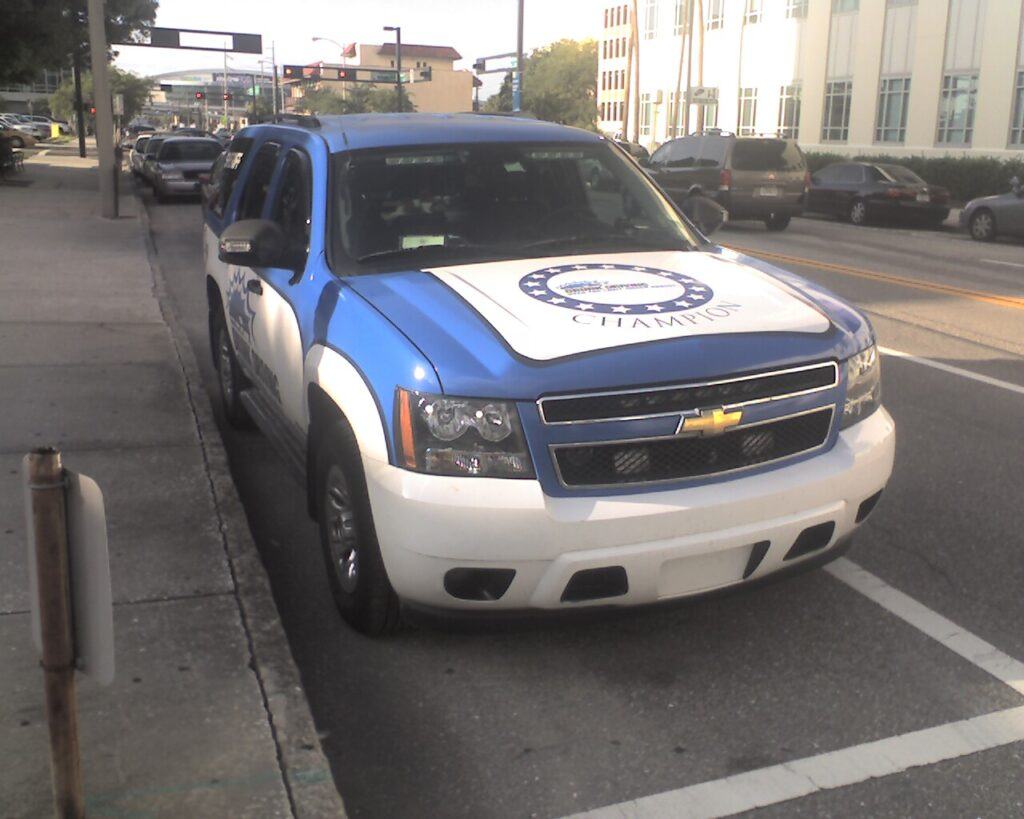
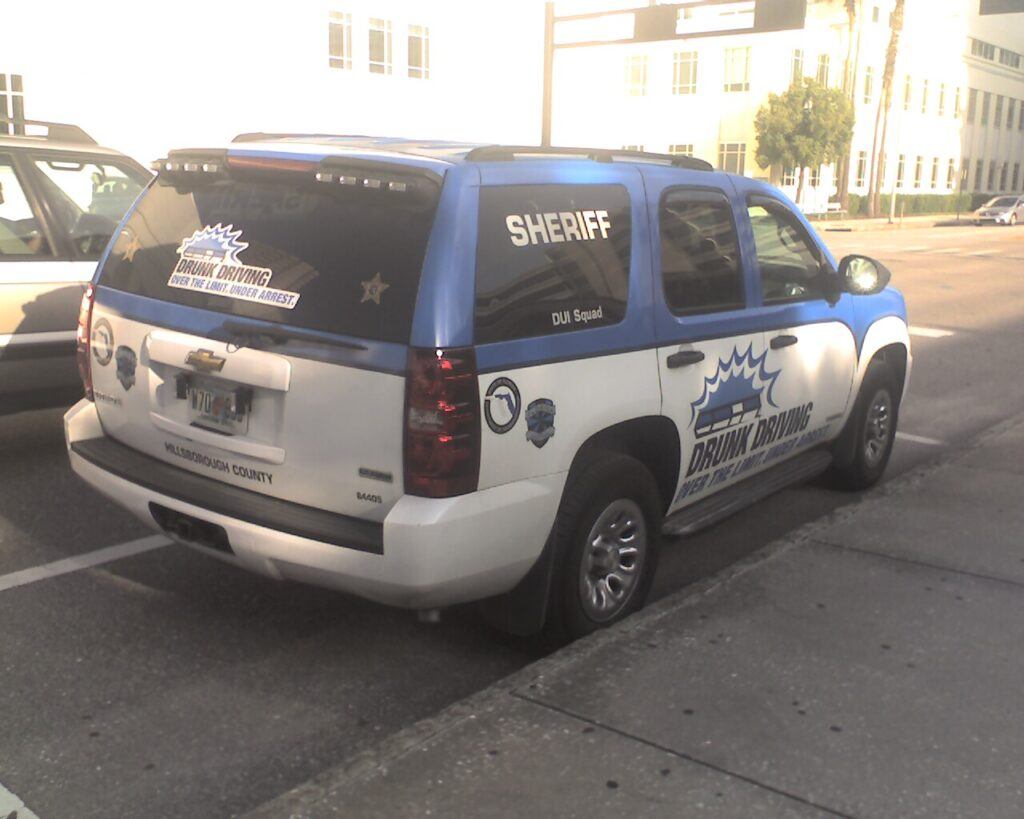
I have spent quite a bit of time in court defending people charged with a variety of traffic offenses. One of the most offensive things I have seen was this luxury SUV that was a trophy in a contest to see how many people could be arrested for driving while impaired, among other things.

This vehicle was parked right outside of the Hillsborough County Courthouse in Tampa Florida. Apparently, the vehicle is equipped with a sophisticated video system and a mobile breath testing machine. Florida law prohibits quotas for issuing traffic tickets. The cops were just caught.

These kinds of incentives given to law enforcement can encourage otherwise decent and law-abiding police officers to violate the law. Maybe they need a weekend off. Maybe they think winning a car for their agency will look good in their personnel file. Maybe they think the prosecutor will reduce the charge from DUI to some lesser charge. Nevertheless, these awards are given for the issuance of citations or the arrests of citizens. No one seems to care to remove these entries on their permanent records when they are ultimately cleared of the charges or negotiate a plea to a lesser charge. Many first-time DUI offenders are never even convicted of DUI.

Since 2009, I have been following this area closely. The stories that are linked below cover in detail the policies and procedures that have been used by police to take advantage of programs to acquire more assets for law enforcement.

The Hillsborough County Sheriff won an SUV. The vehicle is marked with a championship logo and other markings establishing that the sheriff had won a contest to enforce DUI laws. DUI prosecutions are begun with a traffic ticket and issues about whether or not these are quotas should be asked.  The cop who wrote a memo documenting the quota has resigned. Fox has reported, “A top official with the Florida Highway Patrol who told troopers they aren’t writing enough speeding tickets is resigning from his job.” Here is some video on the illegal  ticket game.


Video | Illegal Ticket Quotas in Florida


Traffic Tickets, Arrest Contests, and Quotas – History in Florida

Arrest Contest, Traffic Ticket, and Quotas - History in Florida

Arrest Contest and Traffic Ticket Quotas – History in Florida


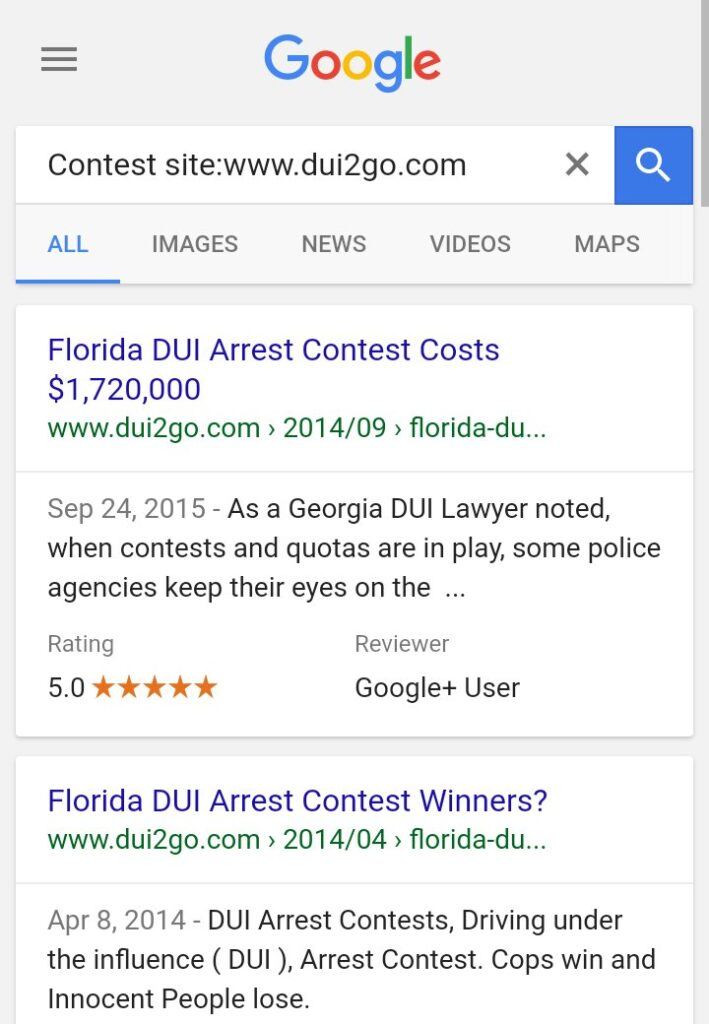
Florida Arrest Contest Costs $1,720,000

www.dui2go.com/2014/09/florida-dui-arrest-contest-costs-1720000.html

Sep 24, 2015 – As a Georgia Lawyer noted, when contests and quotas are in play, some police agencies keep their eyes on the prize. In that case , there is …


Florida Traffic Ticket Arrest Quota Award

Florida Traffic Ticket Arrest Quota Award


Florida Arrest Contest Winners?

www.dui2go.com/2014/04/florida-dui-arrest-contest-winners.html

Apr 8, 2014 – Driving under the influence Arrest Contest … it appears that citizens’ arrests are prizes in this despicable contest.

Arrest Contest Rules and Prizes

www.dui2go.com/2011/12/dui-arrest-contest-rules-and-prizes.html

Dec 15, 2011 – Attorney on Florida’s West Coast just uncovered the “rules” for a recent Arrest Contest. The awards are characterized as …


Hillsborough County Florida Traffic Ticket Arrest Quota Award

Hillsborough County Florida Traffic Ticket Arrest Quota Award


Arrest Contests Continue

www.dui2go.com/2010/10/dui-arrest-contests-continue.html

 Oct 21, 2010 – Largo Cop wins money for Pinellas Arrests. As Florida Lawyer W.F. Casey Ebsary has previously reported, here, here, …

Video | DUI Arrest Contest Trooper Tasers Sober Driver

www.dui2go.com/2012/03/video-dui-arrest-contest-trooper-tasers.html

Mar 30, 2012 – Attorney in Tampa has just received a report that a 200 Arrest Award Winner in a DUI Contest has admitted to numerous violations of DUI …


DUI Traffic Ticket Arrest Quota Award

Traffic Ticket Arrest Quota Award


DUI Arrest Contests in Florida

www.dui2go.com/2016/01/tampa-florida-dui-lawyer-continues-to.html

Jan 9, 2016 – Attorney on Florida’s West Coast just uncovered the “rules” for a recent Arrest Contest. The awards are characterized as DUI …

More Arrest Contest News

www.dui2go.com/2011/02/more-dui-arrest-contest-news.html

Feb 25, 2011 – More Arrest Contest News. Defense Attorney Observes: As we continue to tally the awards given to police officers who arrest drivers, …

Arrest Contest Trophy?

www.dui2go.com/2011/08/dui-arrest-contest-trophy.html

Aug 8, 2011 – Attorney noticed this was parked outside of the Hillsborough County Courthouse in Tampa, Florida this morning. This is an …

Florida Arrest Contest Winners

www.dui2go.com/2009/06/florida-dui-arrest-contest-winners.html

 Jun 19, 2009 – There were 13 contest winners at the Hillsborough County Sheriff’s Office (HSCO) . There were 16 contest winners at the Tampa Police …

Arrest Contest Winner

www.dui2go.com/2011/04/pasco-dui-cop-arrest-contest-winner.html

Apr 21, 2011 – DUI Defense Attorney notes that Pasco DUI cops are continuing their efforts to win DUI arrest contests. Florida Highway Patrol spokesman for …

Blood Test Subpoena for DUI Medical Records Denied

Medical Records in DUI Prosecutions ,Blood Test Subpoenas and Medical Records

Blood Test Medical Records in DUI Prosecutions

in a blood test “burden arises from the Constitutional right to privacy in one’s medical records, which requires the State to demonstrate a compelling interest in the disclosure.”

Requests to Subpoena Medical Records of a Blood Test


After a typical crash police will sometimes attempt to assign blame. The police may suspect alcohol or drug use and attempt to obtain dui blood tests or medical records for people treated in a crash. This is true, even though the driver may have been the only person injured in a one-car crash. Nevertheless, police must jump through a lot of hoops to get your medical records. Sometimes the police jump the gun and make mistakes. If they do, a competent defense attorney can have the medical records and results of a possibly incriminating blood test thrown out by the court.

What is the process for obtaining the medical records of a driver in a crash?


The prosecutor will receive a copy of the crash report from the investigating DUI officer. If done correctly, the prosecutor will send a registered letter to the driver notifying them of the prosecutor’s efforts to obtain confidential medical records. The letter typically will give the driver a certain number of days to subject to the disclosure of the medical records. If the defendant’s lawyer files and an appropriate objection, there will be a hearing in front of a judge who will decide what if any medical records should be available to the prosecutor by subpoena. In the case we have discussed below, the judge ruled that there was not enough information for the confidential medical records of the driver to be disclosed.

Medical Records in DUI Prosecutions, Blood Test Subpoenas and Medical Records


As one commentator has noted in this case the “State failed to establish there was reasonable founded suspicion to believe defendant was driving while impaired by alcohol or controlled substances so as to overcome defendant’s right to privacy in her medical records and therefore failed to establish that medical records contained information relevant to ongoing criminal investigation.”

Complete Text of Order Denying Request for Blood Results in a DUI Case


STATE OF FLORIDA, Plaintiff, v. DEBRA COOPER, Defendant. County Court, 7th Judicial Circuit in and for Volusia County. Case No. 2017-308515MMDB. November 18, 2017. Belle B. Schumann, Judge. Counsel: Susan Bexley, Assistant State Attorney, for Plaintiff. John S. Hager, for Defendant.

ORDER DENYING STATE’S REQUEST TO SUBPOENA “MEDICAL” BLOOD

This case comes before the Court on the State’s Notice of Intent to Subpoena Medical Records of the Defendant, filed November 16, 2017, and the Defense’s Objection thereto, which was filed that same date. A hearing was held on the State’s request on January 17, 2018. Upon due consideration of the facts as proved and the applicable law, the Court hereby DENIES the State’s request to subpoena the Defendant’s medical records. The State failed to establish there was a reasonable founded suspicion to believe that the Defendant was driving while impaired by alcohol or controlled substances to overcome the Defendant’s right to privacy in her medical records, and therefore failed to establish that these records contain information relevant to an ongoing criminal investigation.

Previously, on November 6, 2017, there was a hearing on a motion to suppress in this case, and an order entered by the Court as a result of that hearing. This order, docket number 27 in this case, is incorporated herein [25 Fla. L. Weekly D1019a]. The facts found are as follows:

At the hearing, Assistant State Attorney Tara Libby established that on December 17, 2016, Joshua Wilson of the Ormond Beach Police Department responded to a “crash” within his city. No further explanation of this event was given. No description of the condition of the vehicles, no result of investigation into any driving pattern, no suggestion what may have caused the crash, not even the time of day or weather conditions were elicited by the State. The only further testimony about this “crash” established by the State was the conclusion by the officer that the Defendant was “at fault.” No explanation for this conclusory statement was provided, nor any of the facts that led the officer to this conclusion. There was no evidence that anyone was injured in this “crash” or even that there was any physical damage to any property.

When Officer Wilson spoke to the Defendant, he testified that he noticed she “spoke slowly” and was “lethargic,” again without any further elaboration. The State asked if in the accident report, he “noted alcohol was involved” and he replied, “yes.” The officer agreed with the conclusory question that he believed he had probable cause for DUI. No elucidation of the basis for this conclusion was provided.

On cross examination, the officer testified that he could not recall if he smelled alcohol on or about the Defendant, and conceded that his report did not indicate that he detected the odor of alcohol, or any other evidence of alcohol use. There was no mention of controlled substances.
In this prior order, the Court granted the Motion to Suppress, finding that,

The evidence presented by the State in this case falls woefully short of establishing probable cause to believe that the Defendant was driving while impaired by alcohol or a controlled substance to lawfully request breath, blood or urine. §316.1932, Fla. Stat. (2016). Although not at issue here, it seems unlikely that the State’s proof in this case would even rise to the level of a reasonable suspicion to require field sobriety exercises. The State’s offer of proof was completely inadequate. . . .

In this case, the State failed to establish any facts that would lead a reasonable person to conclude that Debra Cooper was driving under the influence of alcohol or a controlled substance on the date in question. Bare conclusory assertions cannot sustain the State’s burden of proof. Had the State presented any evidence concerning the crash to establish some sort of driving pattern, more observations of the officer, or some scintilla of evidence of impairment by alcohol, the result may have been different. (emphasis added)

Now the State seeks to subpoena the Defendant’s medical records after she was taken to the hospital as a result of the crash. The only evidence presented at the Hunter hearing was the accident report. This report is not an affidavit, and it is unsworn. It also contains statements from the Defendant which all parties agree are privileged and which cannot be used to establish the State’s burden of proof.

Assuming without deciding that an unsworn accident report is acceptable proof and not hearsay, the only evidence of impairment contained in this report is again that the Defendant appeared “lethargic and spoke slowly” after the crash that sent her to the hospital. There is the fact that the crash occurred when the vehicle driven by the Defendant drifted partially into a turn lane and struck the other vehicle from behind. The State makes no argument that the driving pattern or the crash provides evidence of impairment.

Before the State can employ its investigatory subpoena power and compel disclosure of medical records without the consent of the patient, the State “…has the obligation and the burden to show the relevancy of the records requested.” Hunter v. State, 639 So. 3d 72, 74 (Fla. 5th DCA 1994); §395.3025(4), Fla. Stat. (2016). The State’s burden arises from the Constitutional right to privacy in one’s medical records, which requires the State to demonstrate a compelling interest in the disclosure. Art. 1, §23, Fla. Const. “Such [a compelling state] interest exists where there is a reasonable founded suspicion that the materials contain information relevant to an ongoing criminal investigation.” State v. Rivers, 787 So. 2d 952, 953 (Fla. 2d DCA 2001) [26 Fla. L. Weekly D1512a]. See also, State v. Rutherford, 707 So. 2d 1129, 1131 (Fla. 4th DCA 1997) [22 Fla. L. Weekly D2387b] [disapproved on other grounds in State v. Johnson, 814 So. 2d 390 (Fla. 2002) [27 Fla. L. Weekly S250a]] (“Where a right to privacy attaches, the State may vindicate an encroachment on that right…(when it) is established by a showing that the police have a reasonable founded suspicion that the protected materials contain information relevant to an ongoing criminal investigation.”)

In support of their position, the Defense relies on the case of Guardado v. State, 61 So. 3d 1210 (Fla. 4th DCA 2011) [36 Fla. L. Weekly D1087a]. They point out that “crash plus death” or “crash plus injury” does not always make the blood relevant as the State argues; that is not the law. The Defense is entirely correct. Absent some scintilla of evidence that the Defendant was impaired by alcohol or a controlled substance, the State has again fallen woefully short of its burden to demonstrate a compelling interest which exists where there is a reasonable founded suspicion that the materials contain information relevant to an ongoing criminal investigation to overcome the Defendant’s right to privacy in her medical records.

WHEREFORE, based on the argument and authority presented, the State’s Notice of Intent to Subpoena Medical Records is hereby DENIED.

* * *

Source: Online Reference: FLWSUPP 2512COOP

How to Get Arrested for Racing | Use Baseball Diamond for Track

Criminal Mischief Damage Over $1000

Criminal Mischief Damage Over $1000

Criminal Mischief Attorney

Criminal Mischief Attorney Needed


Defense Attorney and racer has been looking for opportunities in dirt track racing. Never thought of this – motorcycles were observed by officers [on baseball diamond] . . . Officers were able to stop all of the motorcycles before the riders could flee. ” So says the Tampa Tribune.
 
“There were no injuries, but both the infield and outfield were damaged and will require repairs before it can be used for play, according to the report.” 
 

If you have been charged with CRMS3000 CRIMINAL MISCHIEF $1000 OR MORE Call Me – Defense Attorney Tampa at 1-877-793-9290 and tell me your story.


Form Code: CRMS3000


Florida Statute: 806.13.1B3


Description: CRIMINAL MISCHIEF $1000 OR MORE


806.13 Criminal mischief; penalties; penalty for minor.


(1)(a) A person commits the offense of criminal mischief if he or she willfully and maliciously injures or damages by any means any real or personal property belonging to another, including, but not limited to, the placement of graffiti thereon or other acts of vandalism thereto.


3. If the damage is $1,000 or greater, or if there is interruption or impairment of a business operation or public communication, transportation, supply of water, gas or power, or other public service which costs $1,000 or more in labor and supplies to restore, it is a felony of the third degree, punishable as provided in s. 775.082, s. 775.083, or s. 775.084.

Immigration and Criminal Defense Consequences

Drugs and Trafficking Crimes, Criminal Conviction, Crimes of Violence, Crimes Involving Moral Turpitude, immigration, ICE, deportation, deport, aliens, Padilla v. Kentucky

Immigration, ICE, Deportation,

Immigration and Criminal Defense


Criminal Convictions, Immigration, ICE, and Deportation


Here is an outline titled “Crimigration: The Marriage of Immigration and Criminal Law.” Friend of the site and author, Terry Christian is a former Immigration Judge and is also Board Certified in Criminal Trial Law. Complete text for download is avaivaible below for Immigation Consequences of Criminal Convictions and Conduct.

In Memoriam: Aug 4, 1952 – Oct 20, 2011 (Age 59) Judge Clifton died a little more than a year after giving this now highly useful seminar and presentation. Terry Clifton Christian was born the son of a coal miner in Welch, West Virginia on August 4, 1952. One of Terry’s signature accomplishments was the honor of being appointed as a Federal Immigration Judge by the Attorney General of the United States in 2003.


Questions about the Immigration Consequences of Criminal Conduct? Call Me Toll Free 1-877-793-9290.


The topics include:

Definition of a Criminal Conviction

Criminal Conduct Incurring Immigration Consequences

A. Crimes Involving Moral Turpitude
B. Crimes of Violence
C. Drugs and Trafficking Crimes
D. Aggravated Felonies
E. Other Crimes and Criminal Conduct Proscribed in the INA

Consequences of Criminal Convictions and Criminal Behavior

A. Inadmissibility
B. Deportability

Motion to Vacate See Padilla v. Kentucky, Case No. 08-651, S.Ct., Argued October 13, 2009-Decided March 31, 2010.)

Order of Vacatur

Complete Document is a Free Download Here.

Special Thanks to guest contributor Terry Christian.

Feds Cannot Bypass Android Security Pattern Screen Lock!


Android, Android Security Screen, Screen Lock

Android, Android Security Screen, Screen Lock

Android Search Warrant


Android Security Pattern


Feds cannot Bypass Android Security Pattern Screen Lock! After too many failed attempts phone is locked. Forensic software apparently cannot read a locked Samsung Android phone. We have just posted the FBI application for the search warrant issued to Google to tell Feds how to retrieve data here: Android Phone Search Warrant

Easy to Bypass Security Screen Lock on iPhone Wired has published a “quick method to circumvent an iPhone’s passcode-protected lock screen: tap the “Emergency Call” button, then enter three pound signs, hit the green Call button and immediately press the Lock button. That simple procedure gives a snoop full access to the Phone app on the iPhone, which contains the address book, voicemail and call history.”

Thanks to Wired Story here: https://m.wired.com/threatlevel/2012/03/fbi-android-phone-lock/


Search Warrant For a Phone? Call Casey at 813-222-2220


Raw Video – Amazing Car Chase in Hillsborough County

Pit maneuver


“Chase terminated . . . call the Coroner.”


After an alleged rampage in our Tampa Palms neighborhood, great pursuit driving by a Tampa Police Officer,  pulled a Pit maneuver, the car skidded into a ditch, and the gunfire starts in this aerial video from the helicopter. Chase terminated, call the ambulance, and call the Coroner.


Crime Mapping Systems in Tampa Bay – Keeping Score

Tampa Bay Crime Mapping Systems

Crime Mapping Systems in Tampa Bay

Crime Maps


“check your neighborhood and see if it is safe to go outside.”


Keeping score is now possible for Police. Statistics are kept for Traffic Cameras, Government Grant Applications, and  to Justify or disprove profiling allegations. Our research has noted that the public information available from the crime mapping systems below is just the tip of the iceberg. Police agencies do not disclose statistics for some crimes while touting the numbers for others. For example, one local agency with a huge public relations nightmare for DUI enforcement, has chosen not to map DUI statistics see: Tampa https://raidsonline.com/?address=tampa,fl . Other agencies may not list certain crimes or activities for reasons unbeknownst to the public.


What happens if you are confused and refused a DUI Breathalyzer test in Florida? Refuse Breath Test

Refuse Breath Test | Confused and Refused – Confusion Doctrine


Confusion DUI Refusal Refuse Breath Test

Confused about refusing a Breath test? Refuse Breath Test

Drivers can seek to have an alleged refusal to take a breath test thrown out of court using the  “confusion doctrine,” when the implied consent warnings are given following the administration of the Miranda warnings. If successful, the refusal of a breath test was not willful and is inadmissible. Under Florida law, the driver to make his or her confusion known to law enforcement. Florida law “does not require law enforcement officers to advise DUI arrestees that the Miranda warnings do not apply to the breath test, and a licensed driver in Florida has consented to the test and is not entitled to consult with an attorney prior to the administration of the test.”


What happens if you are confused and refused a DUI Breathalyzer test in Florida?


“The “confusion doctrine” is a judicially created exclusionary rule that operates to exclude a licensee’s refusal to submit to a breath test if the licensee believed that he had the right to consult with counsel prior to taking the test. See Kurecka v. State67 So. 3d 1052, 1056-57 (Fla. 4th DCA 2010) [35 Fla. L. Weekly D2162b]. Under this doctrine, “a licensee’s refusal to submit to [a] breath test will be excused if, due to a prior administration of the Miranda warnings, the licensee believes that he or she had the right to consult with counsel prior to taking a breath test.” Id. at 1056 (internal citations omitted).”

Miranda Warnings Do Not Apply to the Breath Test in Florida


“In Kurecka, the Fourth District Court of Appeal analyzed the history of the “confusion doctrine” in Florida and other states. Id. at 1057-60. That Court concluded that Florida’s implied consent statute does not require law enforcement officers to advise DUI arrestees that the Miranda warnings do not apply to the breath test, and a licensed driver in Florida has consented to the test and is not entitled to consult with an attorney prior to the administration of the test. Id. at 1060-61. “Accordingly, excluding evidence based on a suspect’s misconception about the right to counsel prior to taking the breath test would be contrary to the legislative intent of Florida’s implied consent law.” Id. at 1060.”


Video: Refusal to Take a Breath Test at Hillsborough County Jail in Florida


DUI Video from inside a jail where a cop is administering Florida’s Implied Consent warning given prior to requesting a suspect to take a breath test on an Intoxilyzer breath machine.


“The Fifth District Court of Appeal declined to apply the “confusion doctrine” on facts somewhat similar to the instant case. In Dep’t of Highway Safety & Motor Vehicles v. Marshall848 So. 2d 482, 485-86 (Fla. 5th DCA 2003) [28 Fla. L. Weekly D1553b], the DHSMV hearing officer presiding over the formal review hearing of the license suspension rejected Ms. Marshall’s self-serving testimony regarding her confusion about her right to counsel. Id. Further, none of the DHSMV documents supported Ms. Marshall’s claims, and she failed to subpoena law enforcement officers who could corroborate her testimony that she was told she could consult with an attorney prior to the breath test. Id.”

“The Seventh Judicial Circuit has once addressed the “confusion doctrine,” in a case where the an officer explained to the petitioner that he did not have the right to an attorney and that any answer other than “yes” to the breath test would be a refusal. Bosch v. Dep’t of Highway Safety & Motor Vehicles10 Fla. L. Weekly Supp. 757a (Fla. 7th Cir. Ct. 2003). The Court found that Mr. Bosch’s reliance on the “confusion doctrine” was misplaced because the Miranda warnings were given after the implied consent notice, and Mr. Bosch must have made his confusion known to the law enforcement officer in order to invoke the doctrine. Id. See also Moore v. Dep’t of Highway Safety & Motor Vehicles13 Fla. L. Weekly Supp. 932a (Fla. 9th Cir. Ct. 2006).”

Refuse Breath Test


“The Court finds that the hearing officer’s decision to reject the application of the “confusion doctrine” was based upon competent substantial evidence. Petitioner did not make his confusion known to Officer Jacobs, and the Miranda warnings were not given contemporaneously to the implied consent warnings. Other than his own testimony, there is no evidence to support Petitioner’s assertion that he was confused over his right to remain silent and the officer’s request for Petitioner to take the breath test. As the trier of fact, the hearing officer is in the best position to evaluate the evidence and the witnesses. See Dep’t of Highway Safety & Motor Vehicles v. Satter, 643 So.2d 692, 695 (Fla. 5th DCA 1994). The hearing officer is not required to believe the testimony of any witness, even if unrebutted. See Dep’t of Highway Safety & Motor Vehicles v. Dean662 So.2d 371, 372 (Fla. 5th DCA 1995) [20 Fla. L. Weekly D2179c]. Importantly, the hearing officer did not find that the “confusion doctrine” did not exist under Florida law; rather, he rejected the defense because Petitioner’s “testimony was not persuasive.” App. M at 5. This Court, therefore, rejects Petitioner’s reliance on the “confusion doctrine”.”

Sources: 24 Fla. L. Weekly Supp. 412a Online Reference: FLWSUPP 2406CRAW ; 13 Fla. L. Weekly Supp. 932a


What happens when a driver changes his or her mind and decides to take a breath test after initially refusing to take one?


Refusal Breath Test

Refusal Breath Test

Sometimes a driver may change their decision to take a breath test or chemical test to determine the content of their breath or blood. This refusal decision is important both in the administrative suspension of a Florida Driver’s license at the Bureau of administrative Reviews and in the criminal case prosecuted by the local State Attorney’s office in court. In driving under influence cases, the evidence of defendant’s refusal to submit to breath test is sometimes admissible. It certainly is admissible where the State seeks to administratively suspend the driver’s license for failure to comply with the implied consent law. How do you let the court know there is a problem with the police procedure? A motion in limine can be filed with the court.


What is a Pretrial Motion in Limine?


A pretrial motion can be filed to attack the use of statements of actions of the driver in the prosecution of a crime. This action results in a hearing in front of a judge and not a jury. If the motion is successful, the jury will never know about the alleged refusal. prosecutors use the argument that the reason for the refusal by the suspect was that they driver knew they would have failed the breath test by blowing over a .08.

What happens when a driver changes his or her mind about refusal to take a breath test?


The driver’s refusal is not admissible, if they timely retract their refusal. The court found, “There was no material inconvenience to the police, for two Intoxilyzers and two Intoxilyzer operators were available. [the Florida Highway Patrol officer]  actually ran his Intoxilyzer, after the retraction, to obtain the “refusal” on the Breath Test affidavit. ” Florida courts have ruled where the driver / defendant was continuously in presence of officers between refusal and retraction, and there would have been no inconvenience to law enforcement in permitting defendant to take test, the refusal cannot be held against them in a DUI case.

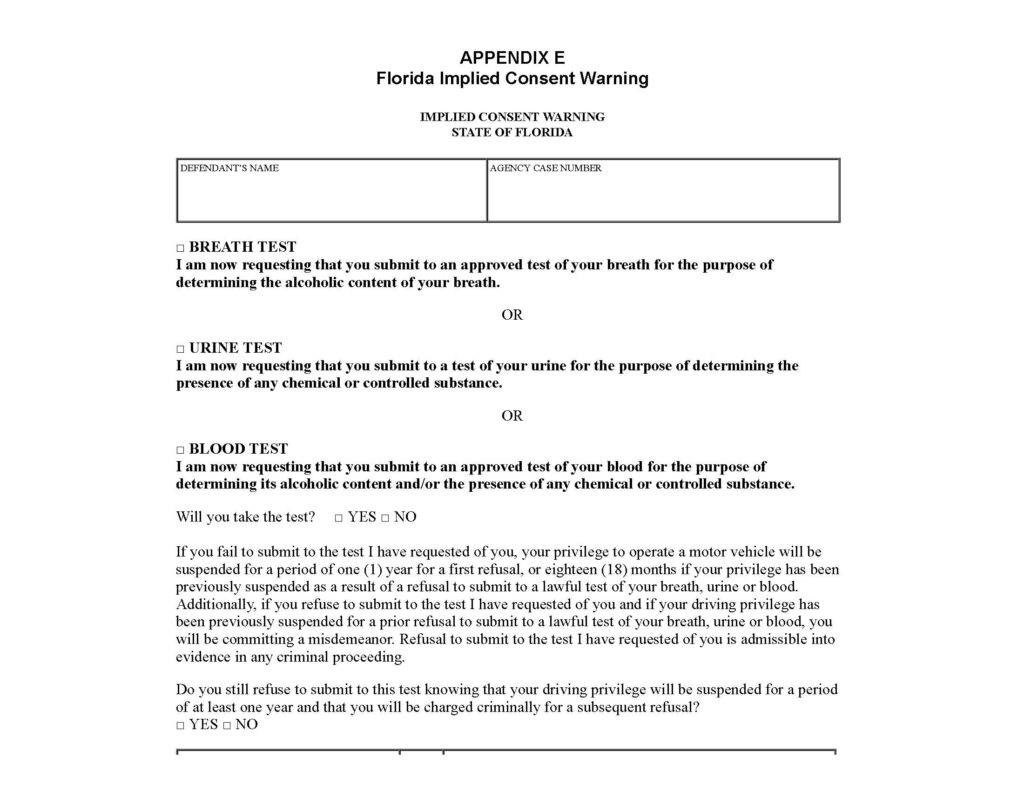
What must a driver be told by police seeking a DUI breath test?


  • Request to submit to a test
  • Suspend for 12 months for first refusal
  • Suspend for 18 months for subsequent refusal
  • Second or subsequent refusal can be a misdemeanor
  • Refusal is admissible in criminal case

“It is not hard to imagine circumstances where the defendant,

soon after declining to take the breath test, has second thoughts.”


Here is the  text of one court’s ruling:

STATE OF FLORIDA, Plaintiff, vs. STEVEN PAUL BURCH, Defendant. County Court, 12th Judicial Circuit in and for Sarasota County. Case No. 2015 CT 012729 SC. April 20, 2017.

ORDER GRANTING DEFENDANT’S MOTION IN LIMINE

THIS CAUSE having come to be heard upon Defendant, Steven Paul Burch’s Motion in Limine, to preclude the State from introducing any evidence that the Defendant initially refused to submit to a breath test, the Court having held hearing and taking testimony and otherwise being fully advised finds as follows:

1. On August 8, 2015, Mr. Burch was arrested for DUI.

2. Mr. Burch initially refused to take a breath test at the scene of the arrest, but changed his mind and requested to take a breath test once he arrived at the Sarasota County Jail.

3. Mr. Burch was continuously in the presence of Trooper Angelicchi from the time of his initial refusal until his retraction of the refusal.

4. When Mr. Burch arrived at the Sarasota County Jail, an Intoxilyzer was available to conduct a breath as well as two permitted breath test operators to conduct the breath test: Trooper Angelicchi and Corrections Officer Rowe.

5. The breath test affidavit that is marked “subject test refused” shows that the Intoxilyzer was run at 11:37 pm, which was long after Mr. Burch retracted the refusal.

6. In Larmer v. State of Florida Department of Highway Safety and Motor Vehicles, 522 So.2d 941 (Fla. 4th DCA 1988), the court stated:

. . .an “absolute rule” prohibiting a subsequent consent after an initial refusal could lead to unnecessarily harsh and self-defeating results. It is not hard to imagine circumstances where the defendant, soon after declining to take the breath test, has second thoughts. If the test results would remain valid, and if no material inconvenience is caused to the police, we fail to see the harm in permitting the defendant to subsequently consent to take the test.

The Court held:

. . .while petitioner was continuously in the presence of the police officers, and in circumstances where no inconvenience would result by permitting him immediately thereafter to take the test that would produce the evidence that is the object and intent of Florida’s Implied Consent Law.
Larmer citied to a Utah case that held a one hour delay was not a refusal.

7. In this case Mr. Burch was continuously in the presence of the police officers. There was no material inconvenience to the police, for two Intoxilyzers and two Intoxilyzer operators were available. Trooper Angelicchi actually ran his Intoxilyzer, after the retraction, to obtain the “refusal” on the Breath Test affidavit. There was no lawful reason not to let Mr. Burch submit to a breath test when Trooper Angelicchi was conducting the test for the ‘refusal.” The duration of the time between the refusal at the scene of the arrest and the retraction upon arrival at the jail was not of such length to render the breath test invalid.

8. While Mr. Burch initially refused the breath test, he later retracted his refusal and requested a breath test. Following Larmer, since Mr. Burch was continuously in the presence of the police officers and under circumstances where no inconvenience would result by permitting him to take a breath test, there was not a refusal within the meaning of Florida’s Implied Consent Law. Also see State v. Eng, 6 Fla. L. Weekly Supp. 649a (Fla. Pinellas Cty. Ct. September 15, 1998).

Accordingly, the Defendant’s Motion in Limine is GRANTED.

Source: 25 Fla. L. Weekly Supp. 289a Online Reference: FLWSUPP 2503BURC

How to get a Florida Driver’s License back after Suspension?


Recently courts have tried to help those with suspended licenses get their driver’s licenses back. According a recent report in the Florida Bar News, one judge organized a “clinic, the first of its kind in Leon County, in order to help resolve a significant problem in the area. Hundreds of Leon County drivers are operating a vehicle with a suspended or revoked license, and Smith says nine out of 10 drivers do not understand what is required of them to get their licenses back.” However, judges are limited in the help that can be provided to those who are subjected to the administrative license suspensions issued to those impacts from driving under the influence charges. Among the reasons these special programs apply: failure to resolve traffic infractions; accumulating too many points on a license; failure to have insurance; or failure to satisfy child support obligations.

Florida Implied Consent Warning Summary

Here is a summary of the language police use when threatening a suspect to take a breath or chemical test:

“If you fail to submit to the test I have requested of you, your privilege to operate a motor vehicle will be suspended for a period of one (1) year for a first refusal, or eighteen (18) months if your privilege has been previously suspended as a result of a refusal to submit to a lawful test of your breath, urine or blood. Additionally, if you refuse to submit to the test I have requested of you and if your driving privilege has been previously suspended for a prior refusal to submit to a lawful test of your breath, urine or blood, you will be committing a misdemeanor. Refusal to submit to the test I have requested of you is admissible into evidence in any criminal proceeding.”

“Do you still refuse to submit to this test knowing that your driving privilege will be suspended for a period of at least one year and that you will be charged criminally for a subsequent refusal?”