Federal Criminal Prosecutions on the Rise – By the Numbers

federal criminal defense, Middle District of Florida, Federal Criminal Defense Attorney,

Federal Criminal Prosecutions on the Rise

Federal Criminal Prosecutions are up for 2012 in the Middle District of Florida says a United States Department of Justice report. USDOJ  national statistics reveal in 2012, there were 84,307 criminal filings in the nation. In the Middle District of Florida for 2012 there were 1,505 Filings and 2011 had 1,290 filings.

Sadly, drug cases, including marijuana, remained by far the largest category  with 593  of the 1505 total (39%) cases. The next largest number of case filings – Immigration (241 cases) (16%) , then Fraud offenses right behind it at 227 (15%) ; Firearms (Alcohol Tobacco and Firearms –  ATF) Gun cases were next at 171 filings (11%).  In the 11th Circuit there were 2,064 criminal appeals filed in 2012 compared to 1,433 filed in 2011.

Tampa Hillsborough County State Courthouse

Tampa Hillsborough State Courthouse

Tampa Criminal Defense Attorney helps those in need at the Hillsborough County State Courthouse 800 East Twiggs Street Tampa, Florida 33602. This high resolution rendering of the Courthouse was rendered using several processes available in Photoshop and Android photo applications. As a criminal defense attorney, this is one of the places where I help those in need.

Tampa Federal Criminal US District Courthouse

Tampa Federal Criminal Courthouse

Tampa Federal Criminal Defense Attorney, Tampa Federal Criminal Defense Lawyer, United States District Court

United States District Court Tampa Federal Courthouse

Tampa Federal Criminal Defense Attorney – Photo Credit


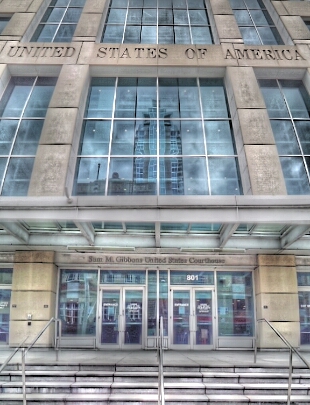
Tampa Federal Criminal Defense Attorney helps those in need at United States District Courthouse Tampa Federal Courthouse 801 North Florida Ave. Tampa, Florida 33602. This high resolution  rendering of the Tampa Federal Courthouse was  rendered using several processes available in Photoshop and Android photo applications. As a criminal defense attorney, this is one of the places where I help those in need.

Map Tampa Federal Criminal Courthouse

Tampa Federal Criminal Defense Attorney

Federal Pretrial Diversion Update

Criminal Defense Attorney, Federal Pretrial Diversion, Middle District Florida, Pretrial Diversion, Pretrial diversion (PTD), PTD,

Federal Pretrial Diversion, Middle District Florida

Federal Pretrial Diversion

Federal Pretrial Diversion


Tampa Federal Criminal Defense Attorney has  previously covered the Federal Pretrial Diversion here: Federal Pretrial Diversion Eligibility Criteria  According to the Feds, “Pretrial diversion (PTD) is an alternative to prosecution which seeks to divert certain offenders from traditional criminal justice processing into a program of supervision and services administered by U.S. Probation. 
 

We just obtained their manual that details the processes used in evaluating these cases for eligibility. The Federal Pretrial Diversion Manual describes the assessment procedure, which is helpful to know in deciding how to help get a defendant into pretrial diversion.


Excerpts From the Manual


Defendants and Offenders Subject to the Procedures


Subject to this policy is any person identified, prior to or subsequent to the formal filing of charges, by the United States Attorney’s Office or pretrial services or probation office as a candidate for diversion and who meets the eligibility criteria identified in the United States Attorneys’ Manual, Title 9, Criminal Division, Chapter 22, Pretrial Diversion Program.  The person identified as a candidate for diversion may seek advice of defense counsel and must sign a pretrial diversion agreement.

Impact on a Defendant’s Job and Employment

The officer should obtain details about the candidate’s work history spanning the previous 10 years.  The officer may ask the candidate for a resume to help establish employment history or gather pay stubs and tax records to help verify previous employment.  If documents relating to past employment are not available, the officer should contact collateral sources or former employers to verify past employment.  After investigating and verifying past employment, the officer should ascertain whether employment program referrals are appropriate. If the candidate’s current employment would be jeopardized by an employer’s knowledge of the candidate’s participation in the diversion program, the officer should use pay stubs or other means of verification. The officer also should conduct employment contacts if such contacts will not jeopardize the candidate’s continued employment.

Federal Pretrial Diversion Eligibility Criteria

Federal Pretrial Diversion , Pretrial Diversion, Pretrial diversion (PTD), PTD, Middle District Florida, Criminal Defense Attorney,

Federal Pretrial Diversion PTD

Federal Pretrial Diversion

The Eligibility Criteria for the DOJ Pretrial Diversion Program have been updated.  The disqualifier for having a history of substance abuse (alcohol or drugs) has been removed.

Federal Pretrial Diversion Eligibility Criteria


According to the Feds, “Pretrial diversion (PTD) is an alternative to prosecution which seeks to divert certain offenders from traditional criminal justice processing into a program of supervision and services administered by the U.S. Probation Service. In the majority of cases, offenders are diverted at the pre-charge stage. Participants who successfully complete the program will not be charged or, if charged, will have the charges against them dismissed; unsuccessful participants are returned for prosecution.”

The four disqualifiers are now — The U.S. Attorney, in his/her discretion, may divert any individual against whom a prosecutable case exists and who is not:

1.  Accused of an offense which, under existing Department guidelines, should be diverted to the State for prosecution;
2.  A person with two or more prior felony convictions;
3.  A public official or former public official accused of an offense arising out of an alleged violation of a public trust; or
4.  Accused of an offense related to national security or foreign affairs.

Federal Pretrial Diversion a Possibility? Call 813-222-2220 .


Source: https://www.justice.gov/usao/eousa/foia_reading_room/usam/title9/22mcrm.htm#9-22.100/s/Jeff

Criminal Defense – Florida Employee Drug Testing Unconstitutional

Employee Drug Testing, Drug Testing, Criminal Defense, Criminal Defense Attorney, Criminal Defense Lawyer

Employee Drug Testing, Drug Testing

Drug Charge Defense 813-222-2220

Employee Drug Testing Unconstitutional


Criminal Defense Attorney has just obtained the full text of a Florida Federal District Court ruling on employee drug testing. The court found where there is no legitimate safety concern, drug testing without probable cause violated the Fourth Amendment.

Case Excerpt:

Great news for Employees subjected to Florida Employee Drug Testing  – Unconstitutional Court says, “The [employee’s] Union here asks for a permanent injunction, which requires three elements: 1) there was a legal violation; (2) there is a serious risk of continuing irreparable injury if an injunction is not granted; and (3) there are no adequate remedies at law. (citation omitted). Here, the Court finds that the EO [Executive Order 11-58], as applied to current employees at the covered agencies, is violative of the Fourth Amendment, and that these employees will suffer irreparable harm if subjected to it.” Defense Attorney Courtesy Copy of Complete Employee Drug Testing Opinion is here.


Drug Testing Problem? Call Casey at 813-222-2220 .


Tampa United States Attorney – Office


Finished another Criminal Defense morning at the United States Attorney’s Office Building in the Middle District of Florida – Tampa Division in Florida.

400 N Tampa St, Tampa, FL 33602, USA

Help Need Here? Call Casey 813-222-2220 .


Criminal Defense morning at the United States Attorney's Office Building in the Middle District of Florida - Tampa Division

Criminal Defenseat the United States Attorney’s Office Building in the Middle District of Florida – Tampa Division


Tampa Federal Criminal Defense Attorney, Tampa Federal Criminal Defense Lawyer, Middle District Florida
United States Attorney’s Office Tampa, Florida


Pinellas County Sheriff Evidence Unit

Courthouse, crime scene, evidence, jail, Pinellas County Sheriff Evidence Unit, prosecution Pinellas State Attorney's,
Pinellas County Evidence Unit in Florida


Crime scene evidence goes  here for prosecution of cases by the Pinellas State Attorney’s Office. Located across the street from the Courthouse and the jail.


Evidence Used Against You? Call Casey at 813-222-2220 .


Criminal Defenses | Statute of Limitations | Bank Fraud

775.082, 775.083, 775.084, 655.0322(6), 655.0322(5), Fraud, Statute of Limitations, defrauding a financial institution, false statement,

Defrauding a Financial Institution

Bank Fraud
Criminal Defense Attorney
Lawyer
Tampa Criminal Defense Lawyer / Attorney has been researching the Statute of Limitations as applied in Florida Courts. Here is the latest case I found. The court threw out most of the charges when a violation of the time provisions under the Florida Statute of Limitations. The defendants were charged in  a “downpayment assistance” program where it was alleged they tricked various lenders into making loans on residential properties located in Florida. The fraud was supposed to make lenders believe buyers had money for a down payment when they did not. The properties were purchased between February 2006 and October 2007.  The grand theft charges for defrauding a financial institution were based on a false statement in violation of section 655.0322(5), Florida Statutes (2005) in mortgages obtained on the properties. The prosecutor charged the defendants with “one count of aggravated white-collar crime, in violation of section 775.0844, Florida Statutes (2005), a first-degree felony (count one), and eleven counts of defrauding a financial institution.”
 

We have posted the complete decision here at our Tampa Criminal Defense – Bank Fraud resource. 

 
A number of these offenses were linked to offenses outlined in the original criminal charges filed earlier in the case. These claims involved , Florida Statutes section 655.0322(6) (2005) that states:
 
Any person who knowingly executes, or attempts to execute, a scheme or artifice to defraud a financial institution, subsidiary, or service corporation, or any other entity authorized by law to extend credit, or to obtain any of the moneys, funds, credits, assets, securities, or other property owned by, or under the custody or control of, a financial institution, subsidiary, service corporation, or any other entity authorized by law to extend credit, by means of false or fraudulent pretenses, representations, or promises, is guilty of a felony of the second degree, punishable as provided in s. 775.082, s. 775.083, or s. 775.084.

The defendants argued that some charges were “brought beyond the three-year statute of limitations applicable to second-degree felonies.” The court ruled “[T]hese counts alleged new crimes and are barred by the statute of limitations.”  “The white-collar charge was based on thirteen prior acts of defrauding a financial institution alleged to have been committed from February 1, 2006 through October 31, 2007.  This makes February 1, 2010, the final cut-off date as to all predicate offenses included in the charge.  The third amended information was filed on January 15, 2010, rendering one of the charges timely. The rest of the charges were thrown out.


Case Excerpt:


“The fact that the individual (predicate) offenses would have been untimely if brought as independent charges does not affect the timeliness of the prosecution for aggravated white-collar crime.  This is a continuing offense, based on the commission of numerous predicate acts. Because of the large number of predicate acts required to establish the offense, the Legislature obviously gave the State additional time to include prosecution for offenses which might have otherwise been untimely.  The same result has been reached in the RICO context.  See Cheffer v. Judge, Div. ‘S,’ 15th Judicial Cir.,  614 So. 2d 632, 633 (Fla. 4th DCA 1993) (holding RICO prosecution based on predicate acts of trafficking illegal drugs not barred by statute of limitations, although predicate acts were individually barred by four-year statute of limitations, because RICO prosecution was subject to five-year limitation).  Because count one was filed inside the end date of the statute of limitations, the count was timely, and the trial court erred in quashing this count of the information.”


Fraud Charges? Call Casey at 813-222-2220